
Assisted Suicide – Contact MSPs 2025

Assisted Suicide Vote – Contact Your MSPs
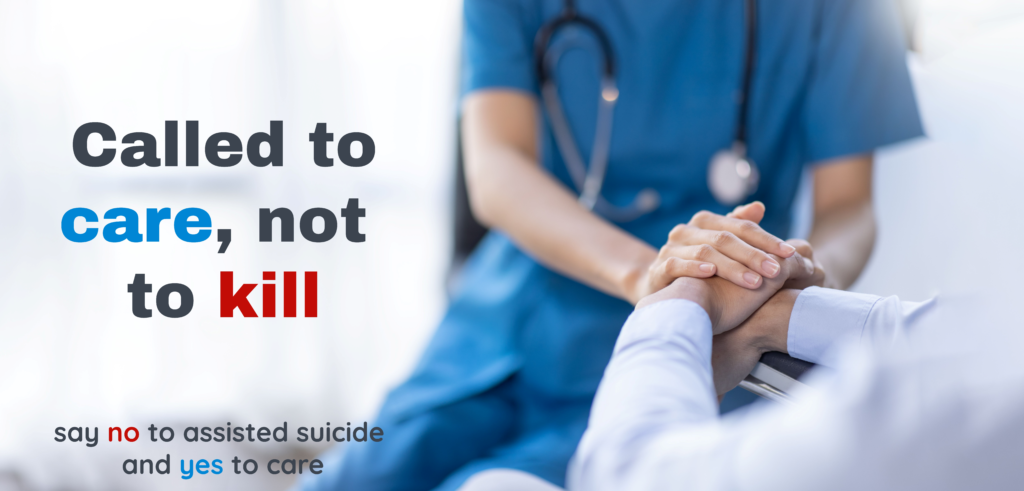


The Scottish Parliament is expected to hold a final vote on Liam McArthur’s Assisted Dying for Terminally Ill Adults (Scotland) Bill in March. This vote will decide whether assisted suicide becomes legal in Scotland.

In May of last year, when MSPs first voted on the Bill, it was passed by just 70-56 votes. We only need eight MSPs to switch to stop this dangerous Bill becoming law.

Many of you have already contacted your MSPs about this, and some of you have also contacted your MP and Peers about a similar bill in Westminster. Your emails, letters, meetings and social media posts have been crucial to making sure parliamentarians are aware of the many concerns about the proposals.

With the key Holyrood vote now looming large it is vital that we do all we can to persuade MSPs to vote against the Bill. Below you will find a briefing with eight reasons why assisted suicide should not be legalised. 

The best way to engage with your MSPs is to do so in person, either by contacting their office to arrange a meeting or by attending a local surgery. You can find your MSPs contact details here.

If you are unable to meet your MSPs in person, please use Care Not Killing’s convenient online tool to email your MSPs about the Bill. Be sure to carefully read the wording of the email to make sure you are happy for it to be sent to your MSPs. Click the button below and enter your postcode when prompted.

If you would prefer to write your own email please go to the Write to Them website and enter your postcode. 

Please remember to always be courteous and respectful when engaging with your MSPs.

Eight Reasons Why Parliament Should Not Legalise Assisted Suicide:

1. Changing Healthcare Forever

  • The state would shift from preventing suicide to facilitating it.
  • Doctors could initiate conversations about assisted suicide, undermining trust in care.
  • The change contradicts the principle of ‘do no harm’ and could cause significant social damage.

2. Attacking Human Dignity

  • Assisted suicide devalues life by implying that some lives are no longer worth living.
  • It promotes a utilitarian view of human worth.
  • It undermines justice and charity towards others, especially the vulnerable.

3. Coercion and Feeling a Burden

  • Evidence from other countries shows people may choose an assisted death due to feeling burdensome.
  • Coercion is often subtle and extremely hard to detect.
  • Vulnerable groups—disabled, elderly, domestic abuse victims, mentally ill—are at greater risk.
  • The Bill lacks mandatory psychiatric assessments, increasing this risk.

4. Expansion of Criteria

  • The Bill’s definition of ‘terminal illness’ is dangerously broad and could include dementia, heart failure, anorexia, and more.
  • Legal challenges may force further expansion under equality laws.
  • Other countries have seen similar expansions despite initial safeguards.

5. Impact on Palliative Care

  • Legal assisted suicide could undermine investment in palliative care.
  • Palliative care is already seriously underfunded yet, if this Bill is passed, the Scottish Government will need to find money from already stretched NHS resources to assist suicides.
  • Doctors may face pressure to choose cheaper assisted suicide over costly care.
  • 25% of UK deaths occur without needed palliative care (Marie Curie).
  • 75% of Scottish palliative doctors would refuse to participate; 43% would resign.

6. Weak Conscientious Objection Protections

  • The Bill offers minimal protection for healthcare professionals.
  • No institutional opt-out means Catholic hospices may lose funding and be forced to close.
  • Experts argue the Scottish Parliament lacks authority to legislate on conscience rights.

7. Breach of Human Rights

  • Legal expert, Tom Cross KC, argues the Bill violates the European Convention on Human Rights because it lacks safeguards for disabled individuals prone to suicidal thoughts.
  • Risks unfair discrimination against those with autism, bipolar disorder, and depression.

8. Deadly Mistakes

  • Mistakes in assisted suicide decisions are irreversible.
  • One error could result in a wrongful death.
  • The stakes are too high to risk legalisation.

If the issues discussed here affect you or someone close to you, you can call Samaritans on 116 123 (UK and ROI), visit their website or contact them on: [email protected]