Pope Francis Calls for a “Diplomacy of Hope” in 2025 New Year Address
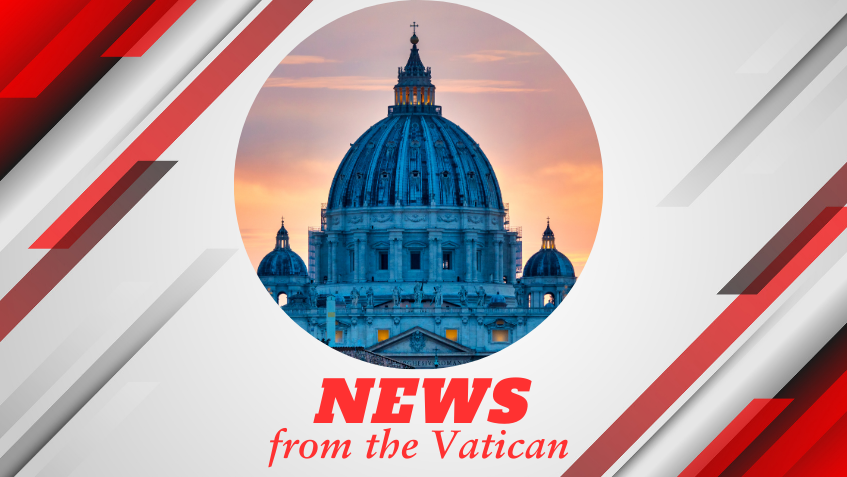
On the morning of 9th January, 2025, Pope Francis welcomed members of the Diplomatic Corps accredited to the Holy See for the annual exchange of New Year greetings. Delivered in the Hall of Blessings at the Vatican, this exchange has become a platform for addressing critical international issues.
This year, the Pope’s message, delivered in part by Msgr. Filippo Ciampanelli, focused on the themes of hope, justice, and peace.
Opening the address, Pope Francis reflected on the symbolic significance of the Jubilee Year for the Catholic Church when people take a moment to pause and reflect on what is truly essential.
He expressed gratitude for the ongoing collaboration between nations and the Holy See, acknowledging the visits of over thirty heads of state or government to the Vatican in 2024, and drew attention to recent agreements, such as those with Burkina Faso, the Czech Republic, and the renewal of the Provisional Agreement with China on the appointment of bishops.
The Pope referenced his travels to distant and nearby regions, from Indonesia and Papua New Guinea to Belgium and Luxembourg, adding that these trips serve as opportunities to engage in constructive dialogue and bring encouragement and comfort to those in profound need.
His Holiness also expressed special thanks to Italian authorities and the people of Rome for their dedication in preparing the city for the Jubilee year, despite the challenges.
Pope Francis voiced concerns over numerous conflicts and acts of global terrorism, such as attacks in Magdeburg in Germany and in New Orleans in the United States, that overshadow the current global landscape.
He noted the rising social and political tensions, emphasising how the spread of fake news, which distorts facts and perceptions, further exacerbates the fear and distrust of others and the future in increasingly polarised societies.
“As a result, new walls are erected for self-preservation, the outside world ceases to exist and leaves only ‘my’ world, to the point that others, no longer considered human beings possessed of an inalienable dignity, become only ‘them,’” observes Pope Francis.
The Pope called for a shift from the “logic of confrontation” to the “logic of encounter,” encouraging dialogue even with parties deemed inconvenient or illegitimate and stressing the importance of diplomacy in preventing the escalation of conflict and fostering peace.
In his address, His Holiness outlined the concept of a “diplomacy of hope” and emphasised the responsibilities politicians should uphold.
Bringing good news to the oppressed
Today’s world, despite unprecedented progress and development, is characterised by loneliness and disconnection. There is a pressing need for messages of hope.
Pope Francis noted that humanity’s intrinsic thirst for truth is increasingly challenged. Denial of objective truths, distrust of rational reasoning, and the manipulation of information via modern media and artificial intelligence are contributing to the erosion of shared understanding. Technology, while offering significant benefits, also fosters anxiety and isolation, consumerism, raising concerns about privacy, job security, and the environmental impact of e-waste.
His Holiness emphasised the importance of media literacy education in fostering critical thinking, equipping young people with tools for personal growth, and enabling active participation in shaping their societies’ futures.
In this context, Pope Francis advocates for a “diplomacy of hope” grounded in a “diplomacy of truth.” He described the manipulation of human rights and the spread of “cancel culture” as forms of ideological colonisation, eroding the traditions, histories, and religious bonds of people. It permits no differences, prioritising individual rights over duties to others, particularly the weakest and most vulnerable. Claims of a “right to abortion” are especially troubling, as they contradict human rights, particularly the right to life.
The Pope also urged a renewed commitment to addressing the inequalities amplified by globalisation and technological advances. He emphasised that multilateral institutions must adapt to effectively tackle challenges of the 21st century, including environmental issues, artificial intelligence, and public health crises.
Binding up the broken-hearted
The Pope’s address underscored the transformative power of forgiveness in diplomacy. He called on the international community to prioritise ending the ongoing conflict in Ukraine and to facilitate humanitarian aid for Palestinians in Gaza. In his appeal, he reiterated the vision of Jerusalem as a “city of encounter” where Christians, Jews, and Muslims coexist in harmony.
He proposed the establishment of the global fund to combat hunger and support development in impoverished nations, redirecting resources currently spent on military expenditures.
He addressed his thoughts to a number of countries and regions ridden by political, environmental, social, economic, or religious crises, such as Sudan, Sahel, the Horn of Africa, Mozambique, the Democratic Republic of Congo, Myanmar, Venezuela, Haiti, Bolivia, Colombia, Nicaragua, Syria, and Lebanon.
Pope Francis expressed concern over growing anti-Semitism and the persecution of Christians in various parts of the world. This includes the restrictions on religious freedom seen in parts of Europe, where laws and practices increasingly undermine the constitutional rights of believers and religious groups.
Proclaiming liberty to captives
His Holiness lamented the persistence of modern slavery in its various forms, ranging from exploitative labour conditions to human trafficking. He advocated for policies ensuring dignified work and the elimination of the root causes of displacement.
The Pope asserted that we should view migration as an opportunity rather than a challenge. He encouraged nations to address the underlying factors that force people to leave their homes, fostering a commitment to global cooperation.
Release to prisoners
Pope Francis reiterated his opposition to the death penalty and called for the commutation of prisoners’ sentences. He also highlighted the ecological debts owed by the wealthier nations to the poorer ones and urged them to cancel unsustainable financial debts.
In light of recent natural disasters, the Pope reminded nations that they must act collectively to address this crisis.
Concluding his address, Pope Francis expressed his aspiration for 2025 to be a year of grace marked by truth, forgiveness, freedom, justice, and peace.
“May hope flourish in your hearts, and may our times fund the peace for which it so greatly longs,” were his closing words.