Image: Associated Press/Alamy Stock Photo
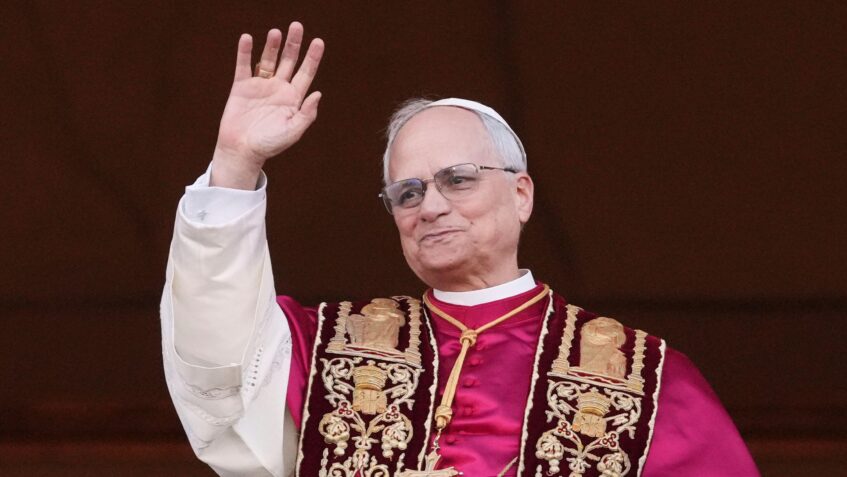
Pope Leo to politicians: be true to Christ and have the courage to suffer for his name
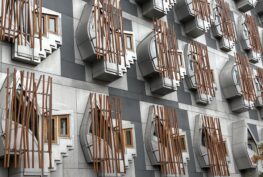
This week, MSPs returned to the Scottish Parliament, fresh from their summer recess and ready for another round of debate, argument, scrutiny and lawmaking, including further consideration of a bill that could legalise assisted suicide in Scotland.
The return of elected representatives to Holyrood helpfully coincides with a recent audience Pope Leo held with a group of French politicians, during which he urged all Catholic politicians to remain faithful to Christ and to have the courage to suffer for his name.
To do this, the Pope suggested politicians should deepen their knowledge of the Church’s social doctrine that Jesus taught and put this at the centre of the exercise of their duties, including the drafting of laws.
Whilst the Church and the political community are righty autonomous and independent from each other in their own fields, Catholics are obliged to follow faithfully what they know by human reason and the divine law, to be just and right, in all that they say and do, including in politics.
Catholics involved in political life are invited to base their political activity on the fundamental principle of a correct understanding of the human person. This is the understanding that every human person is created in God’s image, endowed with dignity and inalienable rights, and also duties. It is recognising that the human person is both the foundation and goal of society, and thus it is the principal task of every society to defend and foster human life and human dignity in its laws and institutions.
The constant teaching of the Church, outlined in a doctrinal note on the The Participation of Catholics in Political Life, is that those who are directly involved in lawmaking bodies, including parliamentarians, have a “grave and clear obligation to oppose any law that attacks human life”, including laws allowing abortion and laws allowing assisted suicide and/or euthanasia.
Parliamentarians must also protect religious freedom, develop an economy that is at the service of the human person and of the common good, with respect for social justice, the principles of human solidarity and subsidiarity, and work for peace and the absolute rejection of violence and terrorism.
Moreover, Catholic parliamentarians are called to be faithful to the Church’s preferential option for the poor, which is the Church’s particular concern for those most in need.
The Pope acknowledged that being openly Christian in today’s politics is “not easy”, especially in the West where “Christ and his Church are marginalised, often ignored, sometimes ridiculed.” He also acknowledged the pressures of “party instructions” and “ideological colonisations” to which politicians are subjected.
The Pope concluded his address, saying that politicians needed to have the courage to sometimes say “no, I can’t”, when the truth is at stake. Here, says the Pope, only union with Christ crucified “will give you the courage to suffer for his name.”
Following the Pope’s comments, Bishop John Keenan, Bishop of Paisley and President of the Bishops’ Conference of Scotland, said: “I can assure all MSPs of my prayers as they return to Holyrood following the summer recess.
“I pray in a particular way for our Catholic MSPs, that they will carefully meditate and pray on the words of Pope Leo and deepen their knowledge of the Church’s social doctrine and remain faithful to Christ in all that they do.”