
First Minister reaffirms support for buffer zones and indicates willingness to consider decriminalisation of abortion
First Minister Humza Yousaf today reaffirmed his government’s full support for introducing buffer zones around abortion centres in Scotland.
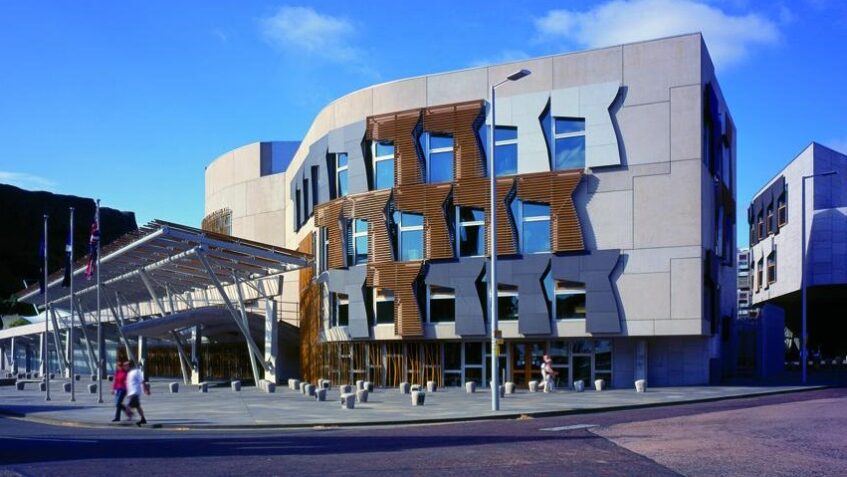
The buffer zones legislation, which anticipates criminalising prayer, is currently being scrutinised by the parliament’s Health, Social Care and Sport Committee.
In responding to a question by Gillian Mackay MSP, Mr Yousaf claimed that vigils harass and intimidate women accessing abortion services and stressed that his government fully supports the Bill.
When asked if the Scottish Government would go further and consider decriminalising abortion, the First Minister said that he would be “happy” to discuss the matter with Ms Mackay “in due course” and indicated that his government is open to “reform” of abortion law in the future.
John Mason MSP countered the First Minister’s claims about intimidation and harassment. Mr Mason said that vigils consisted mostly of elderly, religious people and suggested that legislating for buffer zones was an over-reaction. The First Minister disagreed with Mr Mason, citing evidence of those in favour of buffer zones whilst failing to mention evidence given to the committee on Tuesday from several sources about the peaceful nature of the prayer vigils.
On Tuesday the committee heard evidence from Bishop John Keenan and others who have significant concerns about the Bill. Bishop Keenan told MSPs that the bill “would be in effect, as far as we can see, criminalising static, peaceful vigils”.
Isabel Vaughan-Spruce, co-director of March for Life UK, who was arrested near an abortion clinic in Birmingham last year and later cleared of breaching a public spaces protection order, told the committee that she had been arrested “simply for standing silently next to the closed abortion centre”.
Alina Dulgheriu said she had been about to get an abortion when she was handed a leaflet by those attending an anti-abortion vigil. She said this gave her “the hope I was searching for” and led to her deciding not to proceed with having an abortion.
Police Scotland have already given written and oral evidence to the committee, including a statement that “existing powers and offences are sufficient to address any unlawful behaviour” related to vigils. Moreover, during an evidence session last week, Superintendent Gerry Corrigan told the committee that he did not think that Police Scotland “could go down the road of asking people what they are thinking or what their thoughts are”.
If the Bill becomes law, it will be the most extreme law of its type in the world. It will criminalise silent prayer – heralding the introduction of “thoughtcrime” into Scots law – and could even see people criminalised for having pro-life materials on display in their own homes, schools, and churches, within the buffer zone.
You can watch the exchange at First Minister’s Questions, below:
No Comments